Advert

PMC_Banner_Small

Tuesday, June 27, 2006

Cell Processor Designed To Run Multiple OS's.

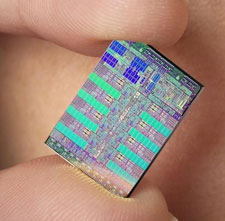
The Cell processor was originally designed from the ground up as a computer processor and not specifically for gaming. The Cell processor was created in a way to allow the running of muliple operating systems concurently using the different cells.
The lowest Level Cell kernel, alled Level 0, is a proprietary layer implemented mainly for security reasons, Kutaragi says -- PS3 game developers will no longer be able to directly control the hardware.

A Level 1 OS will include device drivers and a Real-Time Kernel and scheduler, and will provide all the APIs needed by real-time game developers.

A Level 2 OS(also called a guest OS Layer) might be Linux, a PC OS(Windows/OS X), or a Playstation OS, depending on how the user wishes to apply the device. Sony and its ISV (independent software vendor) and gaming content partners will sell guest OS's on interchangeable, removable hard drives pre-installed with task-based operating systems of various kinds.

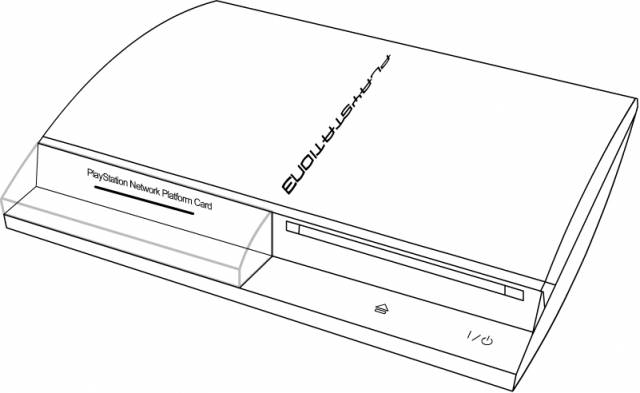
What lies Under the PS3 Trunk?

The PS3 has been causing waves eversince it was first introduced last year. And Sony has caused fanboys to even be more excited with their Next-Gen Console when they offically announced it in this year's E3.
Official specs have been revealed but this didn't stop the video gaming public from speculating that there may still be some PS3 features Sony hasn't announced and that more can still be expected from the upcoming console.Sean Nunan was one of them.

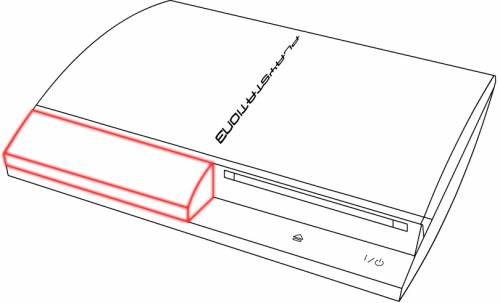
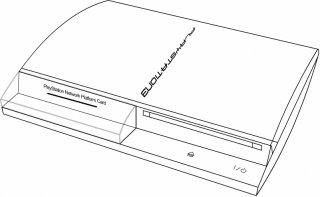
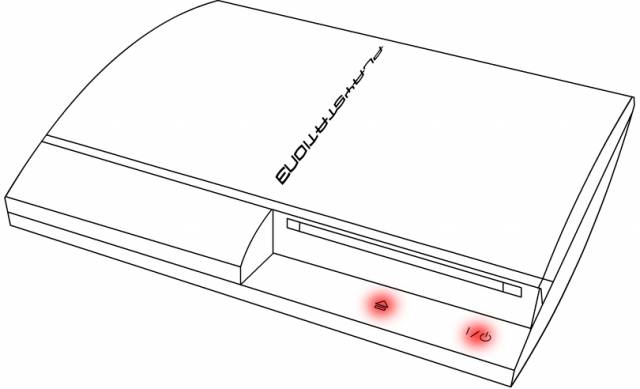
Looking at the PS3 and seeing a trunk-like flap (highlighted in red in the image above) at the front of the console, he became curious about a couple of things: Does it open? If yes, how? And what lies beneath? Sean Nunan may be one creative genius because his questions led him to come up with a few mock-ups of what must be underneath that trunk. Here are his speculations...

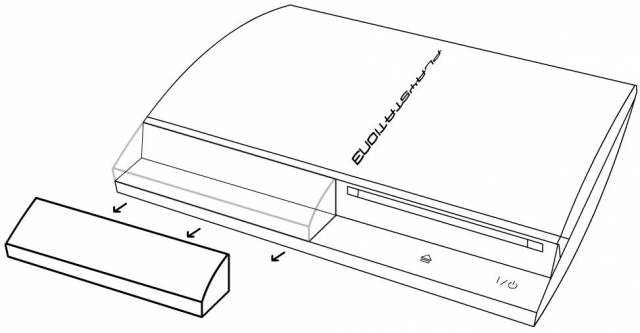
Removing the flap

Speculation 1: Trunk cover is removed by sliding it from the unit.

Speculation 2: Just like the trunk of a car, the flap is flipped up.

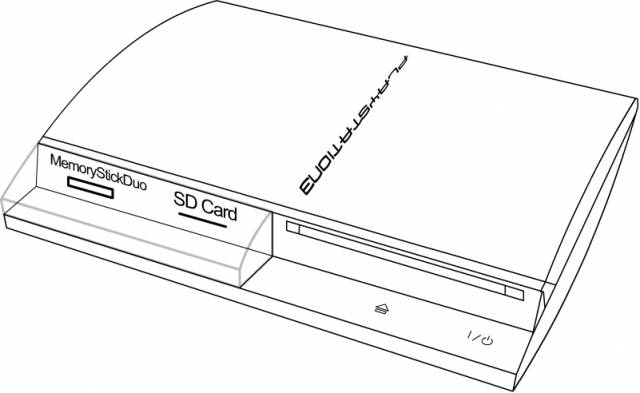
What's underneath it?

Speculation 1: memory Stick and SD Card slots.

Speculation 2: A card slot for the Sony Online Network where all your account details like balance is stored.

Something about the side buttons.

Speculation 1: The On/Off and Disk Eject buttons are feather touch sensitive.


I'm pretty sure, other fans have been questioning about the trunk as well; or if not, these ideas from Sean Nunan may surely open up a lot of other bright inputs.

Sony's Developer Muscle.


For quite a while now Nintendo has survived almost entirely on the strength of its talented first party developers, through the rough times they kept the company afloat with technically brilliant and creatively rich titles that truly made Nintendo gamers feel their console was a worthwhile investment. When the original Playstation debuted,Sony's approach was a little different, they courted just about everyone to make games for the system, and over the years Sony picked a number of those who had developed standout titles and provided partial funding for their studios and titles, eventually snapping them up as first party developers. Fast forward to present day and Sony's amassed quite a wealth of developer talent.

Let's have a look at just a few of these talented folks and what they're cooking up for Sony's new super machine.

Naughty Dog:Founded in 1986 by two 16 year old kids named Andy Gavin and Jason Rubin, the company, then named "JAM" had its name officially changed in 1989. Famous for their astounding technical ability, Naughty Dog gave us Crash Bandicoot during the PlayStation era (which actually went under the working title of Willy the Wombat - talk about dodging a bullet!) and the Jak series during the PS2 generation. They're currently working on an untitled project for the PS3, and little is known of it save for the fact that it centers around the search for a hidden treasure of some kind, and that it likely showcases what can truly be expected of the PS3. - [Hotness Factor of 9.8]

Zipper Interactive:Founded in 1995 by Jim Bosler and Brian Soderberg, Zipper gave us the PC hits MechWarrior 3 and Crimson Skies. They've since gained widespread fan and critical acclaim with their SOCOM US Navy Seal's series of PS2 games. They were acquired in January of 2006 by SCEA and are currently working on... surprise, surprise, a SOCOM game for the PS3. - [Hotness Factor of 8.2]

Sony Santa Monica:These are the guys that gave us the delightfully cuddly and upbeat character of Kratos and the high speed future dualcycle racing game Kinetica. They also house Incognito Entertainment, the guys behind Twisted Metal: Black, and War of the Monsters, they're currently working on the PS3 launch title, Warhawk. They collaborate frequently with creator David Jaffe, who played the role of director on God Of War and has an upcoming PSP game codenamed HL currently in development. - [Hotness Factor of 8.5]

Guerrilla Games:Dutch first party developer formerly known as Lost Boys Games until 2003. They rose to fame with the release of Killzone for PS2, which was labeled (wrongfully so) a "Halo killer." This move that likely hurt the final product but did much to thrust Guerrilla into the public eye. They also developed the ill received Shellshock: Nam'67 for the PS2 using the same game engine. Many argue that given more time and perhaps a bigger budget Guerrilla could have fashioned Killzone, which had a fascinating premise and mythology, into something great. Looks like those guys get their wish, Guerrilla was acquired by Sony in December of 2005 and are currently working on another Killzone sequel for the PS3. Also under production is a title for the PSP called Killzone: Liberation. Guerrilla's hotness factor is difficult to gauge as the company has always showed promise, and with more powerful hardware they could have done wonders, it's also worth mentioning that the company has grown in number and talent exponentially since Killzone - [Hotness Factor of 8.0]

Polyphony Digital:Formerly known as Polys Entertainment, they developed Omega Boost and the Motor Toon Grand Prix series for PS1 but hit it real big with Gran Turismo. Since then Polyphony has been habitually late with game releases, but the end product is always worth it. There's a lot expected from Polyphony this time around as gamers and critics alike want to see its flagship franchise undergo more than just a graphical overhaul. So far all we've seen from them is a rushed E3 2006 PS3 prototype demonstration called Gran Turismo HD, but keep your eyes peeled for the arrival of the Real Driving Simulator some time soon. - [Hotness Factor of 9.7]

Studio Liverpool:Founded as Psygnosis in 1986, they went on to create the critically acclaimed Wipeout series of games which helped establish the original PS1 as a force to be reckoned with. They were acquired by Sony in 1993 and the Psygnosis label was dropped in 1999. Their first PS2 game was Formula One 2001, which they've followed up with yearly updates since. They've only produced one Wipeout game on the platform, Wipeout Fusion, which was not very well received, but have since returned to futuristic hover vehicle racing form with the excellent Wipeout Pure for PSP. They're currently working on a Formula One game for PS3 and are rumored to be developing the next game in the Wipeout franchise (of course). - [Hotness Factor of 8.2]

Sony Online Entertainment:Started out as SISA (Sony Interactive Studios America) in 1995. They developed EverQuest, PlanetSide and Star Wars Galaxies, all massively multiplayer games for the PC platform. Despite what you might think judging from the name, SOE has little to do with SCEA (Sony Computer Entertainment America) or the newly formed SCEWW (Sony Computer Entertainment Worldwide Studios), they're actually a subsidiary of Sony Pictures Digital and have a few internal teams of their own including Soga Interactive, Fire Ant (SOE-Seattle) and Verant Interactive (SOE-Austin). They also collaborated with Sony on setting up the PlayStation 3's proposed counter to Xbox Live, currently known as the PlayStation Network Platform. [Hotness Factor of 8.0]

Other than its numerous first party developers, Sony also has quite a few trusted studios that are... shall we say, not quite family. Often referred to as second party developers, they regularly produce titles exclusive to the PlayStation platform.

Insomniac Games:Surprise! Insomniac, contrary to popular belief are not a first party Sony developer. They have however worked extremely closely with Sony and Naughty Dog in particular over the years. The company was founded in 1994 and its first title was the critically loved first person shooter, Disruptor for the PS1. It followed this with the successful Spyro franchise of games before creating Ratchet and Clank for Sony's next generation system, the PS2. The company is now preparing a PS3 launch title known as Resistance: Fall of Man, and also has a PS3 iteration of its Ratchet and Clank series in the works. It's also kinda nifty to note that Insomniac has been highlighted as one of the best places to work in the US - [Hotness Factor of 9.7]

Sucker Punch:Sucker Punch also shares some sort of working relationship with Insomniac, and the company that brought us the lovable Sly Cooper and his cantankerous crew of kleptomaniacal friends is undoubtedly working on something for PS3, we just don't know what yet. The company's history actually dates back to roots at Microsoft, where a few of the initial team members worked on productivity software, but shared a deep love of games. They left Microsoft in 1997 to form Sucker Punch, and released their first game for the Nintendo 64, Rocket: Robot on Wheels, the rest is history. - [Hotness Factor of 9.2]

Evolution Studios:Founded in 1999 by Martin Kenwright and former Psygnosis co-founder, Ian Hetherington, the UK based studio brought us the phenomenal World Rally Championship and Word Rally Evolution games. I guess that means their first PS3 title, Motorstorm, planned to launch alongside the console is in good hands. - [Hotness Factor of 9.0]

Ninja Theory:Something of a true fairy tale this one. Ninja Theory was formed in 2004 from the ashes of the former development company Just Add Monsters, the guys behind Kung Fu Chaos for the Xbox. The team's long in development premiere next generation title, Heavenly Sword was been searching for a publisher for a number of years before Sony swooped in to provide publishing and support for the title. It was once a launch title, but looks to have slipped into 2007. - [Hotness Factor.9.5]

Just about all these studios are now benefitting from Sony's new SCEWW (Sony Computer Entertainment World Wide Studios) initiative, in which multiple studios across the globe are able to collaborate and share advice, ideas and tools. Some wonder about Sony's arrogance in the face of losing exclusives such as Grand Theft Auto 4, but with this kind of talent working on games for Sony, it becomes a little easier to understand where that bravado comes from.

Monday, June 26, 2006

PS3 Too Use Custom Heat Pipes for cooling Cell & RSX.


Sony’s Ken Kutaragi said that because of the power of the Cell processor and the RSX graphics chip, PlayStation 3 will use a custom cooling solution, with heat pipes.

Heat pipes conduct the heat much faster than conventional cooling, and are commonly used to cool high-end PCs.

Ninja Gaiden Black For PS3.

In the most recent issue of EGM (Electronic Gaming Monthly), there was a small note about Ninja Gaiden Black being ported to the PS3 next spring.

There has not been any offical confirmation from Tecmo or Team Ninja.

Team Ninja is perfectly capable of bringing this rumor to realisation and have Ninja Gaiden become multiplatform.

There were statements earlier this year from Tomonobu Itagaki, head of Team Ninja stating that he would wait and see what Sony will offer before he makes any decisions.

Knowing Team Ninja and their hunger for incredible graphics they must have been impressed with the showing of the PS3 at E3 last month.

More Than Meets The Eye Toy.

Gaming site MegaGames.com has revealed some interesting news regarding Sony's PlayStation 3 Eye Toy. According to a "MegaGames Friend" Sony still has an ace of innovation up their sleeve. This ace is called 'Prime Sense'.

Prime Sense is defined as: "A device, which allows a computer to perceive the world in 3D and derive an understanding of the world based on sight, just the way humans do.

"The article goes on to say that, "The device includes a sensor, which sees a user (including their complete surroundings), and a digital component, or "brain" which learns and understands user movement within those surroundings".

"Prime Sense’s interactive device can see, track and react to user movements outside the computer, all without change of environment or wearable equipment for the end user. The closed device is plug and play and platform independent".

So how does all this information about Prime Sense tie in with the PS3? All we can say is that the Next-Gen Eye Toy will be smart. It will be able to recognize the user, his/her entire environment and their movements, then incorporate those recognitions into console gaming.

If this source proves true, Sony could very well have all the innovation they need to steal Nintendo's spot in the limelight.

Saturday, June 24, 2006

Sonic The Hedgehog Celebrates 15th Anniversary.


Sega has announced that its azure speedster Sonic the Hedgehog turns 15 years old yesterday. The character was first introduced to North America on June 23, 1991 in Sonic the Hedgehog for the Sega Genesis as a way for the company to combat Nintendo's flagship character Mario. Since then, he has gone on be featured in numerous game titles that have sold more than 44 million units worldwide.

To celebrate Sonic's birthday, Sega announced that it will release a number of new titles featuring the blue mascot, for next-generation platforms as well as for the PSP. Additionally, Sega will release Sonic The Hedgehog Genesis, featuring the original 16-bit game, exclusively for the Game Boy Advance this November. The game will feature two new additions to the classic debut, including Sonic’s Spin-Dash move and a new save ability, and will feature a MSRP of $19.95.

Sonic will make his first appearance on next-gen consoles with Sonic The Hedgehog for the PlayStation 3 and Xbox 360 this fall. Sonic will also debut this fall on the PSP with Sonic Rivals, a one-on-one racing platformer that also features other characters from the series such as Knuckles. Finally, Sega will release Sonic Wild Fire, a retelling of the classic tale Arabian Nights, in 2007 for the Wii.

Sony PS3 Will Be The First Device To Utilise Newly-Approved HDMI 1.3.

The group that founded HDMI has today introduced an upgraded version of the technology, now called HDMI 1.3.

Sony's Playstation 3 will be the first device to support HDMI 1.3, which will offer more than twice the bandwidth of HDMI 1.1 (from 4.95Gbps to 10.2Gbps).

This means that future HDMI 1.3 displays will be able to show billions of colours, rather than millions.

Audio support has also been increased to lossless formats like Dolby TrueHD and DTS-HD Master Audio, rather than the current compressed formats of Dolby Digital and DTS.

Consumers who have already invested in HD technology will be pleased to note that products that implement HDMI 1.3 will be backward compatible with HDMI 1.1.

Wednesday, June 21, 2006

Sony Loses Appeal In Customs And Excise Case.

Sony has lost its five year legal battle to have the PlayStation 2 classified as a computer rather than a games console after the Court of Appeal ruled against the company.

As a result, Sony will not be entitled to the estimated GBP 34.2 million (50 million Euro) rebate for import duties that would have been payable had the court determined that the PS2 is a "digital processing unit".

Although games consoles are no longer subject to EU import charges, they were between 2001 and 2004 - while computers have always been exempt.

The appeal was dismissed by Lord Justice Chadwick, who denied Sony the right to take the case to the European Court of Justice.

In his ruling, the judge also took the opportunity to criticise Sony's lawyers for producing a skeleton argument which "goes beyond what can be regarded as acceptable written advocacy" and "exceeds the bounds of propriety."

"I am not here protesting about its inordinate length, nor about its discursive quality, nor about its frequent and unnecessary resort to hyperbole; although all those unappealing features are present," the judge continued.

"My concern is with the repeated aspersions that are cast in that document on the intellectual honesty of the High Court Judge from whose decision this appeal is brought... Fearless advocacy is one thing; intemperate advocacy is another."

Tuesday, June 20, 2006

Immersion Offers To Rumble PS3.

Many were surprised to hear that the PlayStation 3 controller would not support a rumble feature, as it has become an expected part of the modern gaming experience. Both the Xbox 360 and the Nintendo Wii support the technology, meaning Sony's console will be the only next-gen system without a rumble-enabled controller.

Sony's explanation for the feature's absence is that the vibration interferes with new motion-sensing technology being implemented into the controller. But this claim conflicts with news from developer Immersion, who has just finished work on a new vibration effect that can function alongside motion-sensing features.

Says Immersion: "The new TouchSense technology is compatible with motion control and tilt-sensing to allow players to control certain game actions by moving or tilting a handheld controller. Because the speed at which a user moves the controller is much slower than the frequencies generated by TouchSense technology, the two signals can be differentiated using filtering and other techniques. Immersion also offers engineering services to implement the technology within a particular console system.

"Don't expect Sony to give Immersion a call anytime soon, however, as the two companies have been entangled in a lawsuit in which Sony was found guilty of patent infringement over the use of rumble in its DualShock controller and was ordered to pay Immersion $90.7 million.

That this litigation is the true cause of Sony's decision to withhold a rumble feature from its new controller has been a popular theory among industry insiders, but it's a claim that has never been substantiated. As of this writing the company could not be reached for comment. What we do know is the PS3 controller could, apparently, include vibration if Sony wanted it to.

Saturday, June 17, 2006

Sony Dismisses Rumours Of PS3 Downgrade.

A Sony spokesperson speaking to Eurogamer website has dismissed rumours that the PlayStation 3's hardware specs are to be downgraded as "ridiculous."

A report on website Games Radar claimed that Sony was having trouble fitting all the PS3's components within the console case without risk of overheating. The article also suggested that the Cell processor could run at a lower speed than originally stated.

But Sony spokesperson Jonathan Fargher told Eurogamer: "The PS3 downgrade story is categorically not true.

"Developers have been working with PS3 dev kits for anywhere between eight and 12 months, and to suggest that we'd now take the decision to downgrade the hardware at such a late stage, is, well, ridiculous.

"Worse still is the suggestion that we couldn't fit all the technical components into a plastic box," Fargher continued.

"Granted, whilst all products are not perfect, we do have over 40 years of experience making consumer electronics equipment, and therefore, extensive experience in making things fit - PSone and Slimline PS2 being just two examples of that."

The PlayStation 3 is set to hit shops in Japan on November 11th, with US and European launches to follow on November 17th.

Thursday, June 15, 2006

PS2 Still Outselling X360 In US.

Like a good soccer match, the monthly sales battles between the X360 and the PS2 have a lot of exciting back-and-forth. So far, however, the PS2 has remained in control of the match, outselling the X360 in six of the seven months since the X360's debut. The situation is a strong reminder that Sony's PS3 gamble, while huge, has a little more cushioning than is commonly recognized.

Since the release of the X360, Microsoft has averaged 246,000 console sales each month in the US, while the PS2 has seen an average of 473,000 units—a number bolstered by an estimated 1.5 million sales in December alone. Leaving out December, Sony's average drops to 302,000 per month, still outpacing the X360 by a healthy margin.

According to sales estimates from the NPD Group (conveniently collected here and there), the X360 won its first sales victory against the PS2 in April, outselling Sony's offering by nearly 90,000 units (295,000 units in all). The end of Microsoft's supply problems may have accounted for the leap in sales, but May estimates showed a return to more settled buying trends: X360 sales decreased by 74,000 units, while the PS2 climbed to more than 231,000 units total, recapturing the lead with roughly 11,000 more consoles sold.

In short, Sony's PS2 sales remain remarkably strong, and with recent price cuts trimming the system down to US$129, sales are expected to stay strong throughout the year. Sony has sold more than 100 million PS2s, and this year they can expect to add another three million from the US market alone.

The PS2 market isn't "winding down" in any meaningful sense.

Wednesday, June 14, 2006

PS3's HDMI Upgraded To Support 'Deep Color' .

The High-Definition Multimedia Interface (HDMI) specification, a key component of digital television, has been upgraded to support "deep color," the group controlling the interface said Monday.

HDMI LLC, which was founded by Hitachi, Matsushita Electric (Panasonic), Royal Philips Electronics, Silicon Image, Sony Corporation, Thomson and Toshiba Corporation, oversees the HDMI interface, which has served as the multimedia interface for digital television. Over 400 firms have licensed the technology, and the firm estimates that 1 billion HDMI-compliant devices will be available by 2009.

Under the new HDMI 1.3 specification, the clock speed will be increased from 165 MHz to over 225 MHz, said HDMI president of licensing Leslie Chard. The increased bandwidth will allow support for 1080 x 60 Hz displays with 36-bit RGB color, or a 1080p display with a 90 Hz refresh rate. Technically, the specification leaves room for clock rates of up to 450 MHz, Chard said.

The new standard will add a new upgrade path for digital television owners and buyers. Very early DTVs lacked an HDMI connection, leaving early consumers with concerns over whether or not they would be able to play protected content. Now, the new specification promises an enhanced level of detail for next-generation content. According to Chard, a few early adopters should announce products soon, Chard said, with "lots of products by the end of the year," in time for Christmas, he said.

The key addition to the new specification has been the support for 30-, 36-, and 48-bit RGB or "deep" color, a specifcation that extends color depths beyond the capability of the human eye to perceive them.

The ITU 601 standard, which governs today's displays, allows only 60 to 80 percent of the available colors, even if the display can support more, Chard said. "The color bit depth [of today's displays] is typically 24-bits RGB – that gets you 16 million colors, and the human eye can distinguish that," Chard said. "That leads to scaling and onscreen effects which you can pick up. Either 36-bit or 48-bit RGB is beyond the ability of the human eye to distinguish."

Sony's upcoming PlayStation 3 will support deep color, Chard said, and PC graphics companies like ATI and Nvidia can bake the technology fairly easily into its cards, he said. Although the "deep color" provision was added with the next-generation Blu-Ray and HD-DVD specifications in mind, no formal announcement of support has been made by either camp.

We don't have a public announcement, but it's natural to assume as standards get big and are accepted that they may be used," Chard said.

"Anybody going to have an HD-DVD or Blu-Ray drive needs to have an HDMI output," Chard added. "Anyone who's claiming to have a media notebook needs to have this."

The new color depths will be consistent with the new "xvYCC" color scheme which was adopted as a standard by the International Electrotechnical Commission in January. Sony showed off a xvYCC-compliant 82-inch LCD at this year's CES.

The standard will also add support for Dolby HD and DTS-HD audio. The audio will be combined with a lip-sync compensation feature to synchronize the audio and visual channels -- not actively, but through the use of latency information which will will be actively communicated to the other components, Chard said. Finally, support for an HDMI mini-connector has been added, to allow digital video to be streamed from a compliant camcorder directly to a display.

Finally, future displays will support what is known as "Consumer Electronics Control," a standard that will allow the HDMI devices to talk to one another, and configure themselves. The most profound effect will probably be the phasing out of the high-end remote control devices, which will be replaced with a simpler control scheme, Chard said. The technology may be marketed as "One-Touch Play," he said.

The HDMI interface is often thought of as the hardware component to the High-Definition Content Protection standard, which is governed by a separate licensing organization. No HDCP-specific provisions were made, Chard said, although the new HDMI spec "caused a few bugs" in testing with HDCP, he said.

Cell Shrinks In 2007.

Sony Computer Entertainment president Ken Kutaragi revealed today in an interview with Japan's Impress Watch technology site that the PS3's Cell processor will make the switch to a 65nm manufacturing process in 2007. Shipments of the more efficient chip will make it out later that year.

The Cell is in production at IBM's Fishkill and Sony's Nagasaki fabrication facilities. Currently, the chip is being produced using a 90nm process. Switching to a 65nm process will reduce costs, potentially leading to a price reduction of components that use the chip.

Elsewhere in the interview, Kutaragi hinted further at the use of Cell in products besides the Playstation 3. "It's probably okay to use just 2 (SPEs). We have plans," said the SCE boss, referring to plans to make the Cell into a more general processor. The "SPE" mentioned by Kutaragi is in reference to the parallel processing units that give the Cell much of its computational power. The PS3 has 8, of which 7 are active.

Tuesday, June 13, 2006

Rockstar Assembles The GTA IV Cast & Crew.

The ever popular crime adventure, Grand Theft Auto, will be making its debut onto next-generation consoles in Fall 2007. Before then, gamers will be treated with the delight of the upcoming Vice City Stories on the PSP. However, Rockstar is already generating a dream team to handle the GTA IV project.

Rockstar President Dan Houser, along with James Worrall, will be the primary writers for GTAIV. James Worrall has seen work with past Rockstar projects such as GTA and Manhunt. Lazlow Jones, or as GTA cohorts know, 'Lazlow', is labled as part of the cast for the game. Lazlow Jones has lended his voice talent to GTA3, Vice City, San Andreas, and Liberty City stories as a radio host. If the trend continues, Lazlow's role in GTA IV would probably be a radio host. Also listed as part of the GTA IV cast is Navid Khonsari. Navid is popular with his voice talent for the Max Payne games in which he voiced the Porn Host in Max Payne 2. He also contributed to voice talent for GTA games as well, notably for pedestrians.

Grand Theft Auto IV isn't scheduled to release on the PS3 and Xbox 360 until October 17, 2007, but it is clearly noted that Rockstar is already assembling a strong group for the GTA IV team and cast. Expect this list to expand in the near future.

High-tech Sony Patent Has Gaming Potential.

Barry Fox over at New Scientist makes a habit of rooting through patents, and his latest gathering of the new and novel ideas includes a Sony effort that might have big implications for games.
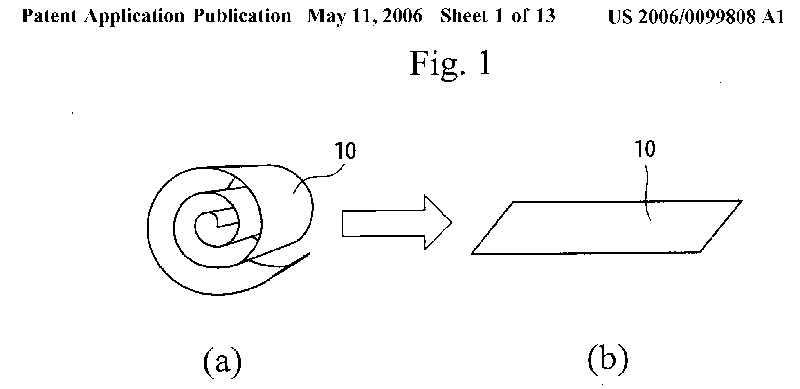
Click image to enlarge.
Sony's US Patent application 20060099808 describes an "electrorheological fluid device and an electronic apparatus, which realize satisfactorily changeable hardness or tension in a portion of the device or apparatus which a human body touches, enabling application to a product that needs to have portability."

Basically, the patent describes electronic devices and displays that are flexible enough to be rolled up or folded when not in use, but become rigid when a small electric current is passed through them. The application lists wide-ranging uses for the technology, and suggests it could be applied to cell phones, PDAs, PCs, remote controls, clocks, glasses, and even game systems.

"The electrorheological fluid device can be applied to, for example, part of a controller of a home-use game machine as another example of the electronic apparatus of the present invention. A user touches a control section of the controller by fingers, and the feeling of touch is controlled by the electrorheological fluid device. For example, if a game player is defeated in a fighting game, the electrorheological fluid device is controlled to become soft in order to improve the realistic sensations in the game."

As of press time, Sony representatives had not responded to requests for comment on the patent's planned uses.

Wednesday, June 07, 2006

New Blu-ray Movies Announced.


Sony Pictures, 20th Century Fox, Lions Gate, and Paramount have announced their exciting Blu-ray lineup. The release dates are still yet to be determined. With twenty titles from Sony Pictures, twenty more from Fox, ten from Lions Gate, and quite a few more from Paramount, Blu-ray looks as though it's going to start off with a bang.

The first batch of movies from Sony Pictures will be released on single-layer Blu-ray discs, with Black Hawk Down and The Bridge on the River Kawai being an exception, appearing on dual-layer 50GB discs later in the summer. Fox has a plan for their Blu-ray releases, with Mike Dunn (President of 20th Century Fox Home Entertainment) stating that they will have simultaneous releases of their films on both Blu-Ray and DVD to give the new format a chance to take hold on the market by getting the brand familiar in people’s homes. Will it be enough to compete with the rival HD-DVD format? Only time will tell.

Below is a partial list of movies announced from the four movie studios:

Sony Pictures:
• Hitch
• The Fifth Element
• Legends of the Fall
• House of Flying Daggers
• Bram Stoker’s Dracula
• Desperado
• For A Few Dollars More
• The Guns of Navarone
• A Knight’s Tale
• Kung Fu Hustle
• The Last Waltz
• Resident Evil: Apocalypse
• Robocop
• Sense and Sensibility
• Stealth
• Species
• SWAT
• XXX

20th Century Fox:
• Fantastic Four
• The League of Extraordinary Gentlemen
• Behind Enemy Lines
• Kiss of the Dragon
• Ice Age

Lions Gate:
• Lord of War
• The Punisher
• The Devil’s Rejects
• Saw
• Terminator 2: Judgment Day
• Reservoir Dogs
• Total Recall
• Dune
• Rambo: First Blood

Paramount:
• Four Brothers
• Sahara
• Aeon Flux
• Sky Captain and the World of Tomorrow
• The Italian Job
• Lara Croft: Tomb Raider
• U2: Rattle and Hum
• Tim Burton’s Sleepy Hollow
• We Were Soldiers
• The Manchurian Candidate
• Mission Impossible 1, 2, and 3

Comparison Between Real-Life And The 'Crysis Engine'.

Its amazing how much gaming has evolved in just 12 short years of 3D technology. There is really no deference between real life and the game.

Click Image to enlarge.
Shown above is what can be done with the powerful 'Crysis Engine' which has been developed to run on PC's.There is good news however,it is rumoured that a PS3 & X360 version of the 'Crysis Engine' is in development.Lets hope so.

Tuesday, June 06, 2006

Analysts Predict Win For PS3.

In the aftermath of E3, we all became part time analysts in an attempt to determine who would emerge victorious in the next generation race.

But how do the real analysts feel on the matter?

The latest issue of Famitsu has some revealing comments from three Japanese analysts: Daiwa Securities' Eiji Maeda, Nomura Securities' Yuta Sakurai, and Deutsche Securities' Takashi Oya.

The magazine asked the three for their opinion on which hardware maker had the biggest impact at E3. All three pointed to the Wii, noting that Nintendo's stock price rose from 16,000 yen to 19,000 yen in the three weeks surrounding the show. One of the biggest factors affecting their opinion was that 27 Wii titles were playable at the show, giving the impression that the system will launch with a strong lineup.

Impressions of the Wii were also influenced from the outside -- specifically, Sony's PS3 price. Maeda stated that the 62,790 yen Japanese price for the base system is not something that allows for an easy purchase, and he questioned how much the system will move among early adopters. All three analysts questioned how much demand Blu-Ray would have by the end of this year, and suggested that the system could have a rough start. Sakurai noted, however, that the PS3 could suddenly take off once the price comes down a certain level.

In the end, all three analysts predicted the PS3 to come out on top in the next generation race. However, they expect its lead to shrink. "The PlayStation 3 brand power is, of course, very strong," said Maeda. "However, the winds are have changed a bit. I don't believe there will be a commanding victory on the level of the PS2."

Ooya got the last word. "The hardware concepts this time are clearly different. Because of this, it seems to be a situation where the winner and loser won't be clear."

PS3 Includes PS2 Chipset For Backwards Compatibility.

A surprising report has emerged from Japan's Ultra One monthly technology magazine. The magazine's July issue reports that Sony will be achieving backwards compatibility on the PlayStation 3 not through software emulation, as previously announced, but through physical hardware.

The magazine states that the PS3 hardware, in its current form, includes the core PlayStation 2 chipset. This presumably means that initial PS3 units will include the single Emotion Engine (the PS2 CPU) and Graphic Synthesizer (the PS2 graphics chip) combo chip that powers the slim model PS2.

The magazine adds that Sony plans on removing the PS2 chipset from future revisions of the PS3 hardware once it has finished development of a proper software-based PS2 emulator. Such a removal would help bring down costs for the system.

Sony has repeatedly stated that PS2 software would run on the PS3 through software emulation, leaving many to believe that the company had developed a powerful emulator for the older hardware. This would have been a particularly impressive feat, considering that even the PlayStation 2 originally used a combination of hardware and software to maintain backwards compatibility with original generation PlayStation games.

If the Ultra One report is true, the use of hardware emulation casts some doubts on what kind of visual updates we can expect for PlayStation 2 games. PlayStation games saw a few marginal upgrades when running on the PlayStation 2 due to the PlayStation graphics chip being emulated entirely through software running on the PS2's Graphics Synthesizer.

On the other hand, hardware emulation pretty much guarantees that every game that runs on the current PS2 will do so on the PS3.

A few other revelations appear in the Ultra One report, an investigative story into the reasons for the PS3's high price point. Izumi Kawanishi, head of Sony's Software Platform Development Division, commented to the magazine that one difference between the PS2 and the PS3 is that the PS3, as it was announced, is "nothing more than just the basic system." Sony is considering releasing models with larger volume hard disks and upgraded network features in the future. However, Kawanishi noted, Sony won't be changing CPU clock speed or memory amounts, as all PS3s have to run the same games.

The PS3 comes equipped with, in addition to a default hard disk, a "large amount of flash memory," the magazine reveals. This is used to house the operating system and all future system updates. Based on the wording in the magazine, it seems that the hard disk is to be used exclusively for multimedia content and will not contain any system features; users will, after all, be able to swap the built in hard drive out with any standard drive they pick up at a computer hardware store.

The magazine also provides an assurance about the PS3's compatibility with its own games. The PS2 lost compatibility with older titles as new models were released featuring updated chip designs. This won't be a problem with the PS3, as the magazine reveals that in the event that problems are discovered following an updated chip design, the system will be able to connect Online to download any required patches, which will then be stored on the hard disk.

We'll wait for official word from Sony on details in the Ultra One article, before considering this report confirmed.